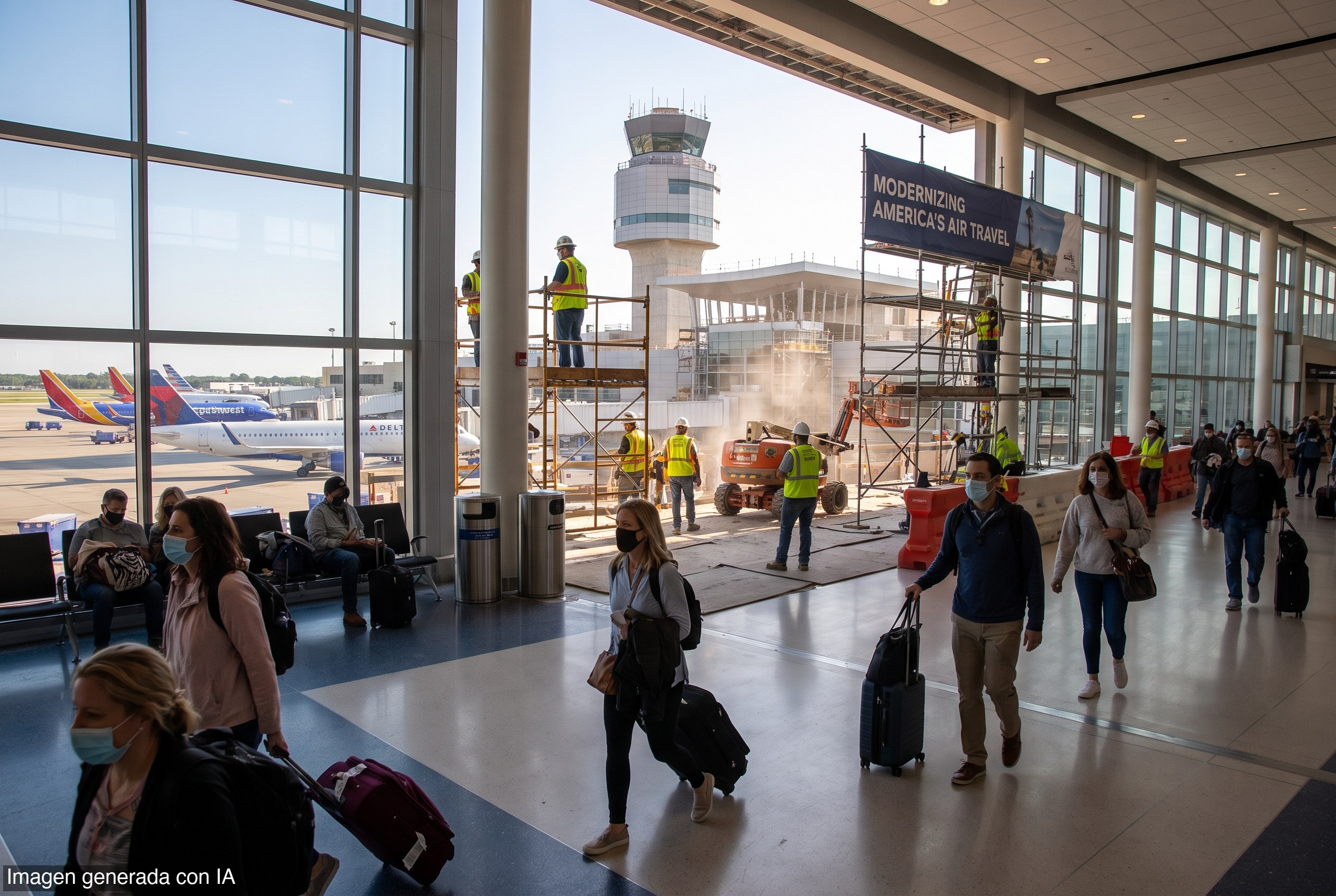
Driving the news: U.S. air travel demand was 'record-breaking' in July, according to Airlines for America, and the TSA expects more than 17 million travelers through checkpoints during the Sept. 3–9 Labor Day window — even as the Iran war pushed airline fares 25.5% higher year-over-year, per Bureau of Labor Statistics data.
By the numbers: - Fares rose 2.2% in July alone; up 25.5% from a year earlier - Airlines for America warned carriers face roughly $24 billion in additional fuel costs in 2026 - Congress gave the Department of Transportation $12.5 billion to fund more than 10,000 modernization projects - The FAA hired more than 2,000 controller candidates after accelerating recruitment - Dubai International Airport traffic plunged 30%+ in H1 2026 — a stark contrast to U.S. resilience
Zoom in: Transportation Secretary Duffy announced the FAA installed its 100th Surface Awareness Initiative system Wednesday, replacing decades-old radios, radars and equipment with fiber-optic connections and electronic flight strips. FAA Administrator Bedford warned in August that flight traffic could double over the next two decades.
The bottom line: American consumers voted with their boarding passes — absorbing higher fares rather than staying home. The Trump administration is betting that a $12.5 billion infrastructure overhaul, plus billions more it is seeking from Congress, will build a system capable of handling that demand for decades. This is what competent, market-oriented governance looks like: invest in hard infrastructure, get out of the way of demand, and let Americans fly.