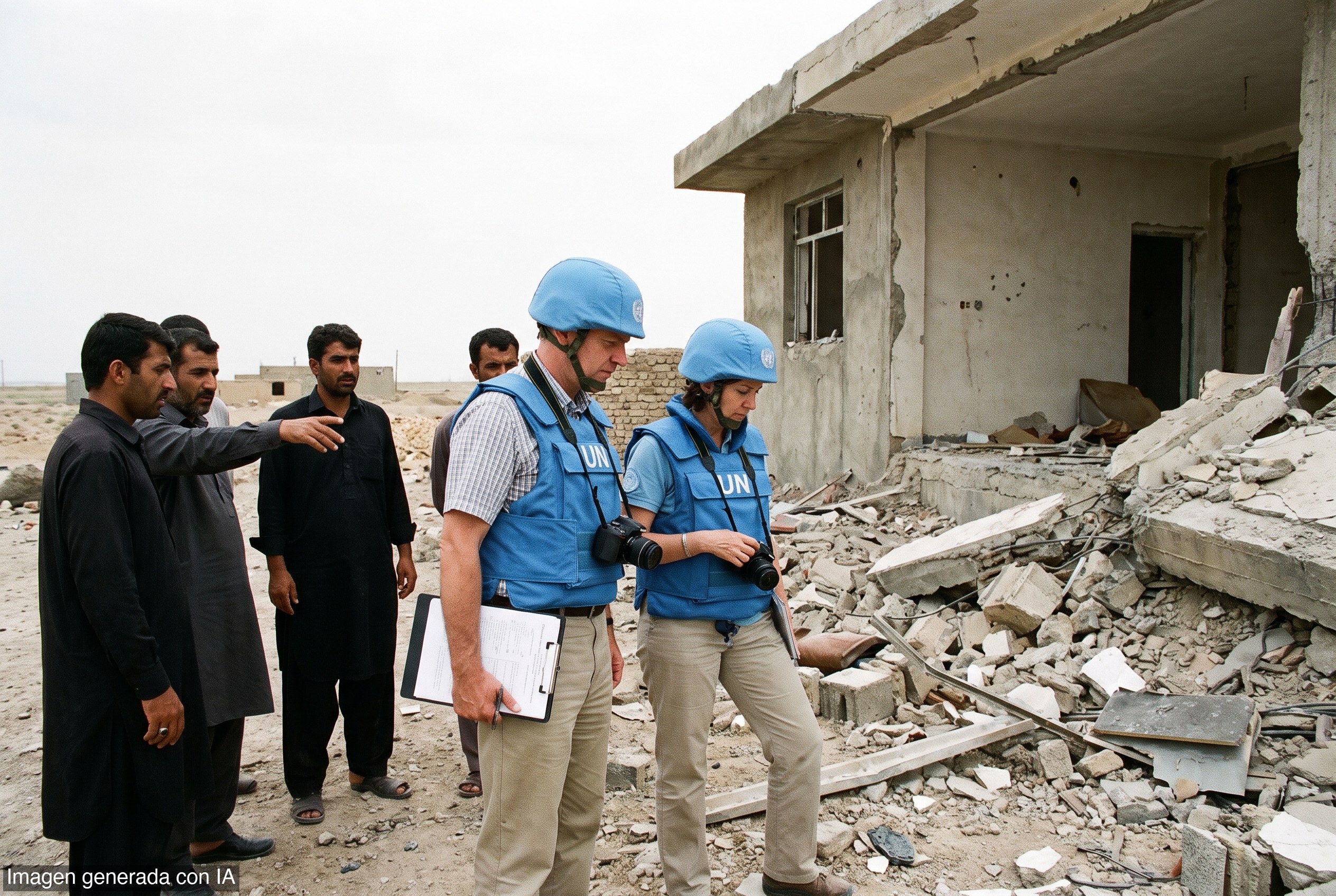
A U.N. fact-finding mission says there are 'reasonable grounds' to believe the U.S. committed war crimes in two strikes in Iran, including a hit on a school in Minab and another strike in Lamerd.
The Independent International Fact-Finding Mission on Iran said the Minab attack killed over 150 people, including about 120 children, and that the Lamerd strike killed 22 civilian men and women. The panel said the attacks were 'indiscriminate' and that the U.S. failed to verify the school was a military target.
The report also said the U.S. should pay 'full reparations to victims.' U.S. Central Command has said it was looking into reports about the Minab strike, but has not released findings. The Pentagon has not published results of its investigation.
The White House rejected the report. Anna Kelly, principal deputy press secretary, said the U.N. Human Rights Council has accomplished 'nothing for human rights' and argued the only party in the conflict that committed war crimes was Iran.
The same U.N. mission also accused Iran of 'gross human rights violations' and crimes against humanity during crackdowns on protests. It said state security forces acted 'on a staggering scale in all 31 provinces' and carried out arbitrary arrests, torture, solitary confinement and denial of legal counsel.
Why it matters: this is a fight over war conduct, civilian harm and whether the U.S. military followed its own rules. It also puts the Trump administration in direct conflict with a U.N. body it already distrusts.
The big picture: the report hits both sides. It challenges U.S. claims of precision while also documenting the Iranian state’s repression at home. For the White House, the diplomatic cost is clear. For taxpayers, the question is whether civilian harm safeguards were strong enough before the strikes.