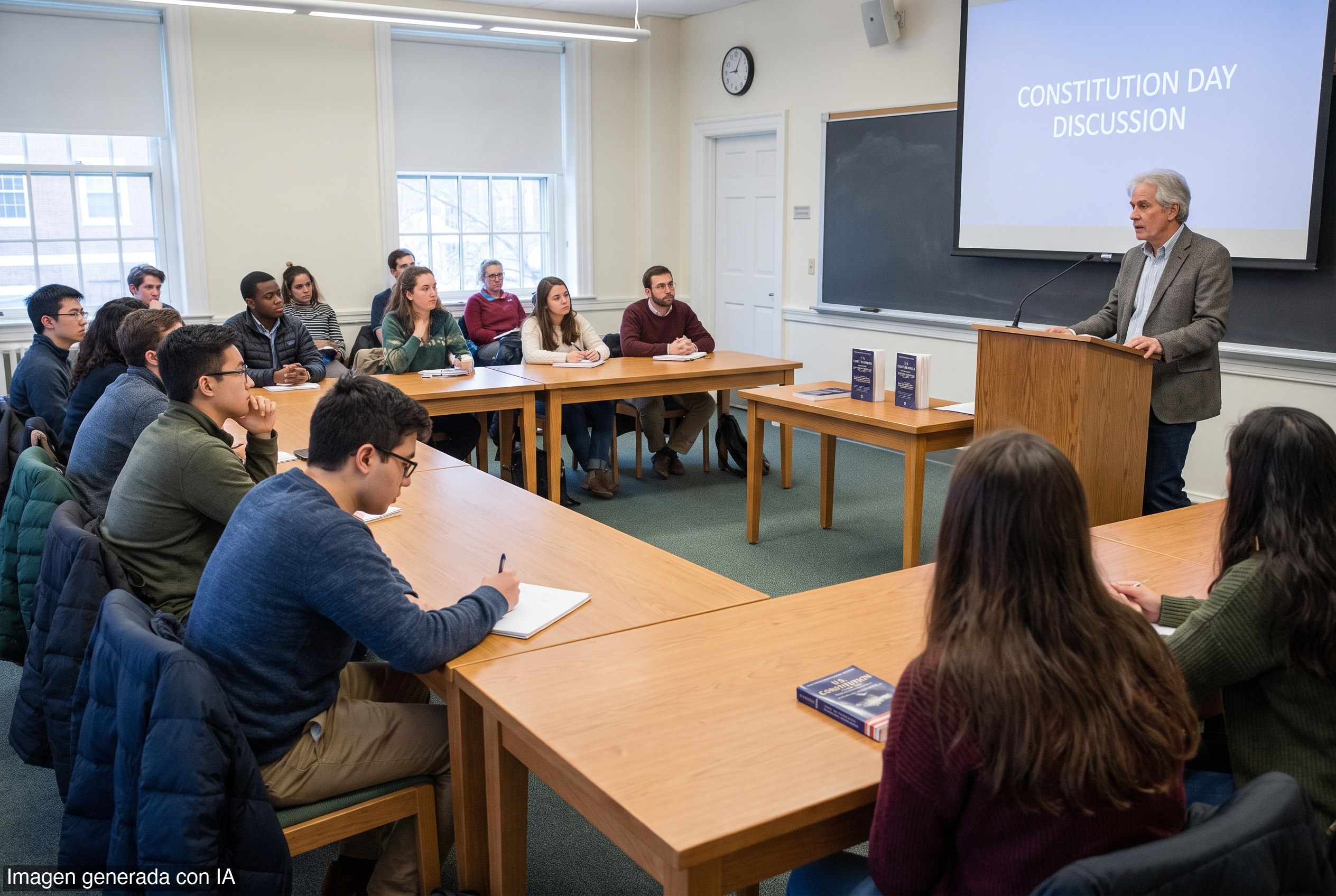
Constitution Day is Sept. 17, and federal law requires every college to hold an annual educational program about the Constitution. The law does not require that the program be positive.
At Dartmouth College, that loophole has been used for criticism. Last year, a Dartmouth lecturer described the Constitution as 'flawed' and praised Abraham Lincoln for fighting its toleration of slavery. According to one student in attendance, the lecturer later said the Constitution is now 'significantly less flawed.'
Other Dartmouth speakers have also used the campus stage to attack the founding document. One reportedly said claims for the right to individual conscience had 'become a threat to civil society.' Another reportedly described the coalition electing President Donald Trump as 'racists and segregationists, ex-socialists and the religious right.'
To be sure, the Constitution is fair game for debate. The piece points to real issues worth discussing, including slavery, the 16th Amendment and the expansion of federal power. It also notes the Constitution's core strengths: peaceful transfers of power, divided government, federalism and checks and balances.
Why it matters: colleges are supposed to educate, not use taxpayer-supported forums to flatten the country’s founding charter into a grievance session. A day set aside to explain the Constitution should make room for criticism, but it should also make room for gratitude.
The big picture: the Constitution still anchors liberty, limits tyranny and protects rights against majority rule. If universities want to model serious civic debate, they should spend at least one day honoring the system that makes that debate possible.