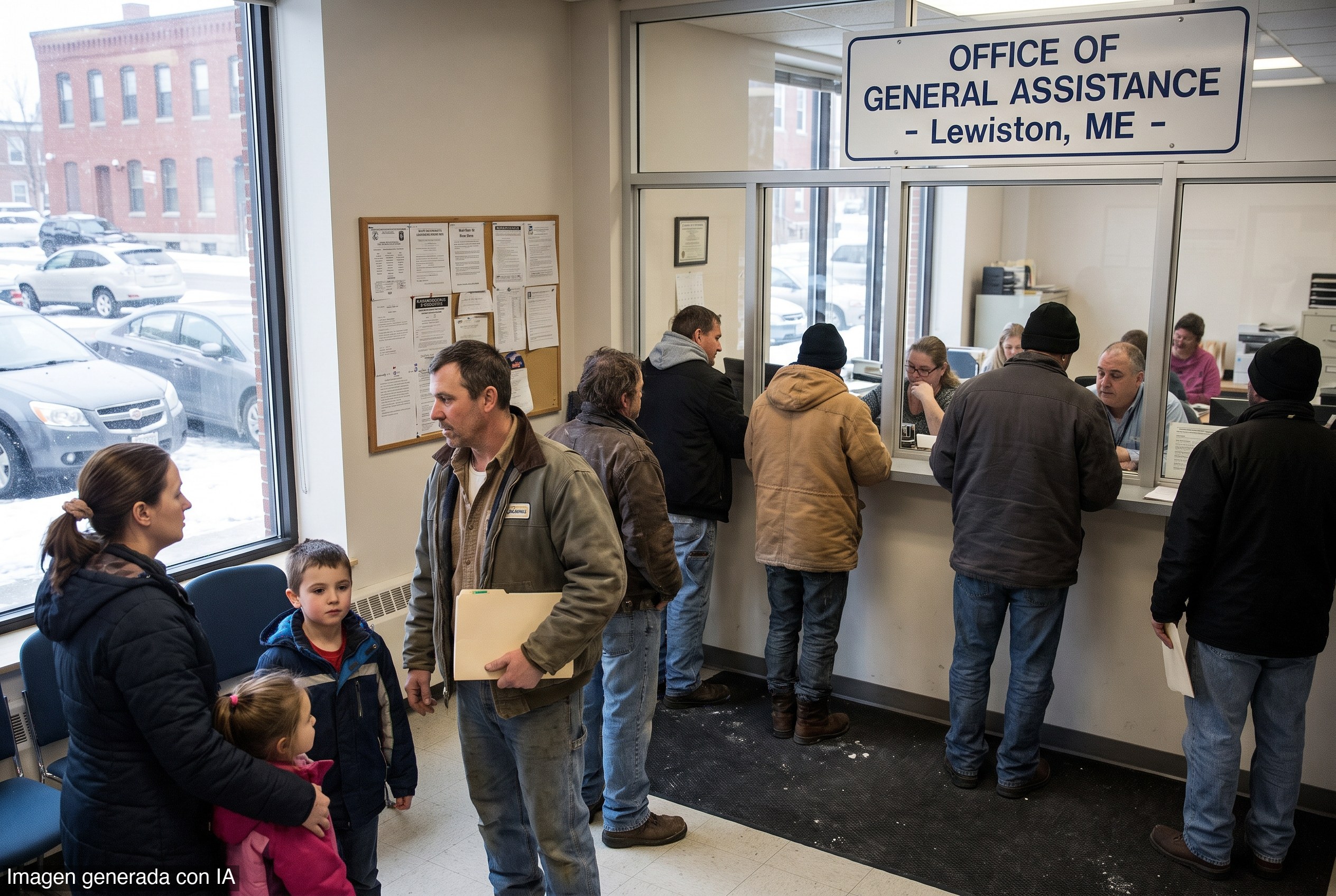
Lewiston, Maine, has changed from a working-class historic town into what one travel influencer called the 'most dangerous city in the safest state.' Steve Cortes says his documentary, 'The Basilica or the Mosque—Mass Migration to Maine,' traces that shift to the city’s Somali immigrant community.
Cortes says that community accounts for 6,000 of Lewiston’s 38,000 residents. He says the city also has major school challenges. Sixty percent of students in grades 6 through 12 are foreign-language students, and Lewiston is home to four of Maine’s 10 worst-performing English language arts schools.
The documentary also ties the story to federal asylum policy. Under the Biden administration, asylum claims ballooned to 4 million or 5 million, according to the report. Steve Robinson of The Maine Wire says rejected applicants often do not self-deport. 'There is no mechanism to remove you from the country and there is no incentive for you to leave,' he said.
Robinson also says some operators profit from the system. He points to Houssein Hirsi Ahmed, who opened the Lewiston branch of Kah Express, now Ramad Pay, which funnels American money back to Somalia. From 2021 to 2023, he was also finance minister of Jubaland, Somalia, a province influenced by Al-Shabaab.
Why it matters: the dispute is not just about migration. It is about whether law, self-sufficiency, and American rules still govern the border, or whether taxpayer systems become a pipeline for foreign interests.
The bottom line: if the government cannot remove rejected applicants, enforce the rules, or stop abuse, local communities absorb the costs while outsiders keep the upside.