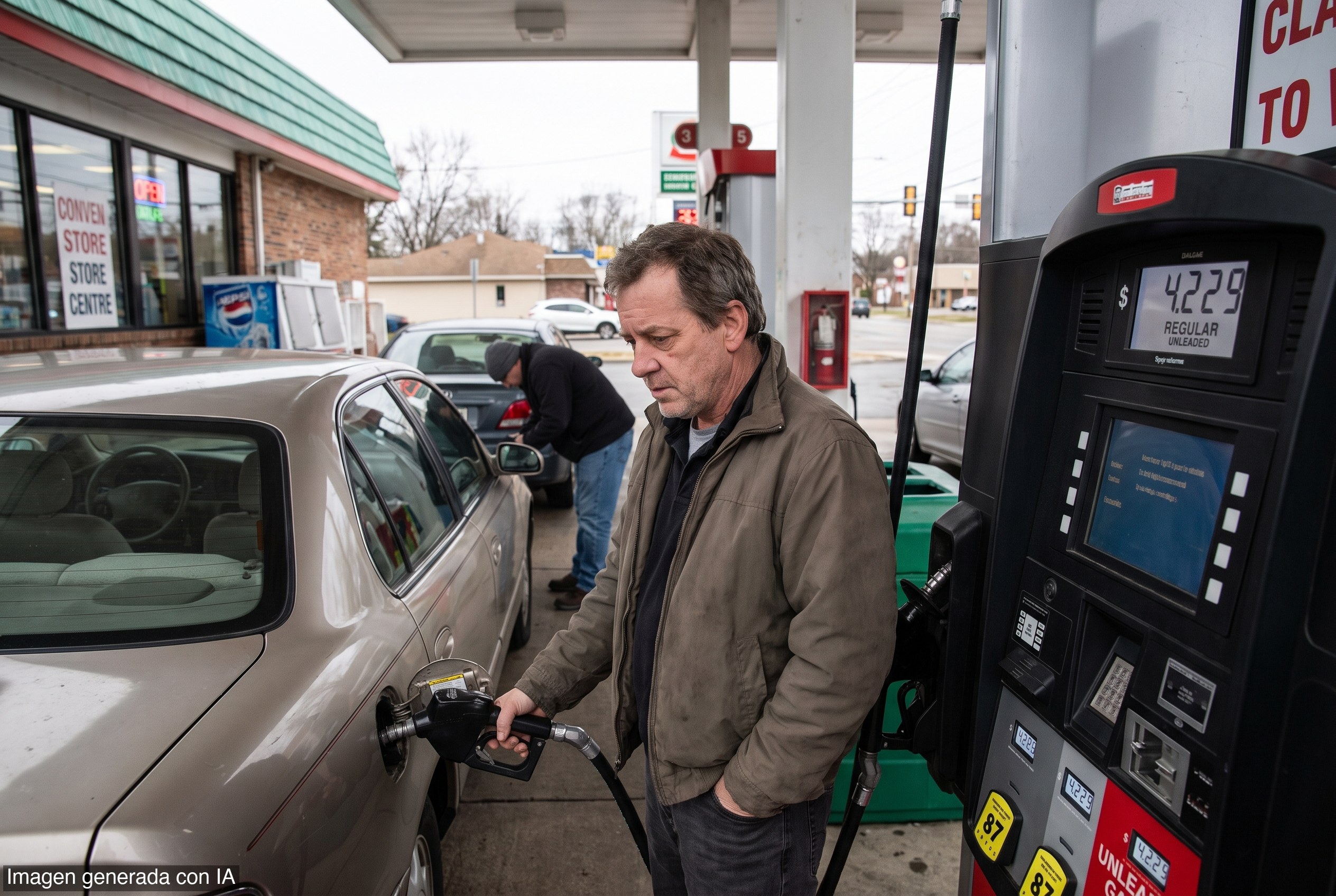
Driving the news: Brent Crude traded above $100 per barrel Wednesday for the first time since July — up nearly 40% since the war began — per The Wall Street Journal. Regular gasoline hit $4.22 a gallon, a 32% jump from a year ago, according to AAA. Diesel reached a record $5.94 a gallon, up 60% year-over-year.
By the numbers: - $101B+ in extra fuel costs paid by Americans through seven months of war, per Brown University researchers - $777 in extra fuel costs per average U.S. household (Brown) - $1,000 estimated cost per typical household, per Mark Zandi, chief economist at Moody's Analytics — who called the true figure 'likely higher — meaningfully higher' - $663–$1,100 range per household estimated by the Institute on Taxation and Economic Policy
Between the lines: The administration is sending mixed signals. Energy Secretary Chris Wright told CNN he didn't 'want to have an opinion' on gas prices. Vice President J.D. Vance told reporters he 'wouldn't call it a war.' Treasury Secretary Scott Bessent blamed Ukraine's attacks on Russian energy infrastructure for 'upward price pressure on a global basis' — while sidestepping U.S. strikes on Iranian energy infrastructure.
What's next: The Trump administration has extended troop deployments well into 2027. ISW analysts wrote that Iran feels it has 'not yet achieved its key objectives in the conflict,' increasing the likelihood of escalation. Iran's lead negotiator described Gulf energy infrastructure as 'sprawling, accessible, and exposed,' adding that 'American oil and gas companies… share that exposure.'
The bottom line: A Reuters/Ipsos poll found 71% of voters disapprove of the president's handling of the cost of living, and 54% said the war's benefits have not outweighed its costs so far. Trump has called higher prices 'a very small price to pay' — but voters are keeping score, and November is coming.