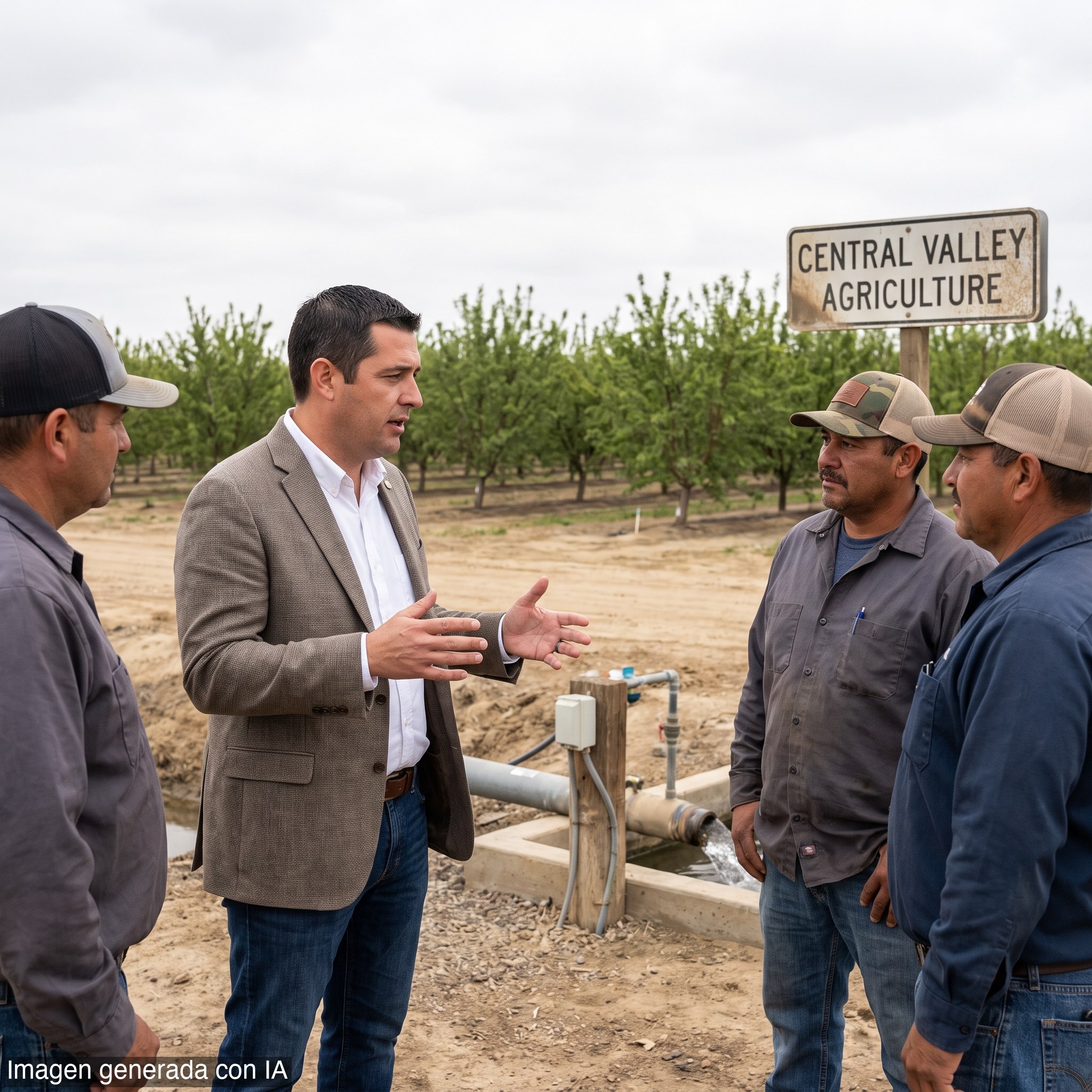
Rep. David Valadao, 45, is running to keep his seat in California's newly drawn Congressional District 22.
Valadao finished first in the June primary with 40.7% of the vote, followed by Villegas with 32.4%. California voters approved Proposition 50 in 2025, temporarily replacing the state's independently drawn congressional districts with new, legislatively drawn maps for elections through 2030.
That has turned this into another competitive Central Valley race, with political strategist Tab Berg arguing the new lines give Democrats an advantage in the agricultural district. He called it a 'rage gerrymander.'
Valadao is trying to run on what has kept him alive in past close races: a local profile, bipartisan branding, and a focus on agriculture, water, and affordability. He said voters are tired of 'the extremists on both sides of the aisle' and want 'just getting things done.'
Water remains a central issue. Valadao said 'Water's our first and foremost fight,' and argued California's water policies have pressured farmers and communities by limiting both surface water and access to groundwater. He says the answer is more storage, better infrastructure, and changing how water that flows out to the ocean is managed.
Villegas, a college professor and Visalia Unified School District board member, is offering a more progressive platform. He has backed tuition-free community and trade schools, opposed the Trump administration's immigration enforcement policies, and called for lower living costs through expanded health care, affordable housing, and higher wages.
Why it matters: the district's redraw could decide whether local politics still outweigh party labels. For taxpayers and farmers, the race also spotlights water policy, infrastructure, and who gets to set the rules in California's Central Valley.
The bottom line: Valadao is betting that competence and local ties still beat ideology. Democrats are betting the new map changes the math.