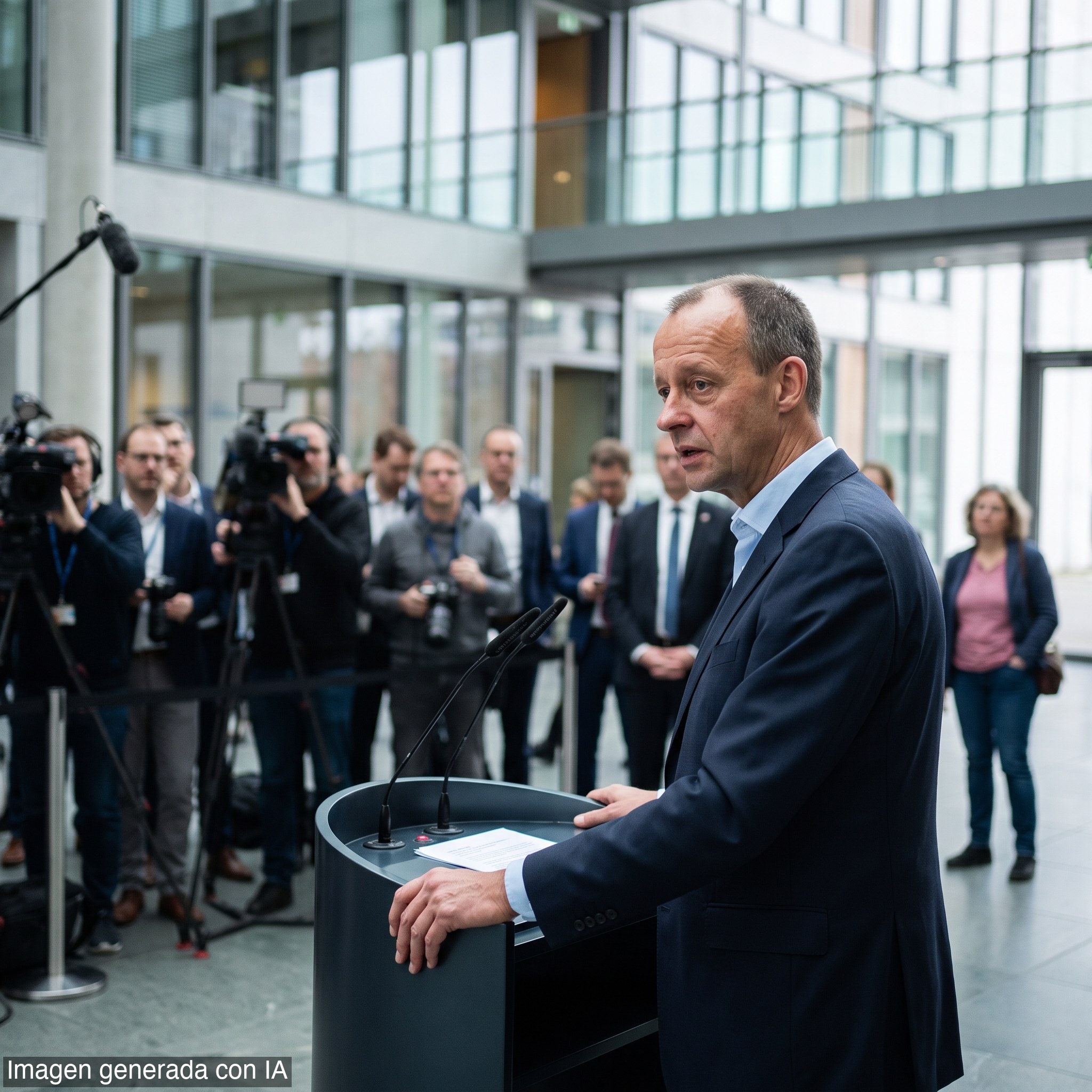
Driving the news: German Chancellor Friedrich Merz said he wants new laws that would make it impossible to post anonymously on social media. He also said the state must be able to protect citizens from misinformation.
Merz told students, 'Please, nobody come to me with free speech. This has nothing more to do with free speech,' while promoting the idea that anonymous online commentary should be curtailed or banned. He also said he does not subscribe to 'libertarian' American arguments about speech.
Merz said more must be done to protect citizens 'from false information, from personal putdowns, from discrimination.' The source says this fits a broader push in Europe for tighter restrictions on social media as leaders lose control of their political narratives.
The same source says online censorship laws in the U.K. have led to numerous arrests, and that The Telegraph reported more people are jailed every day for speech violations than for fraud. It also says Germany has online portals for citizens to report each other for 'illegal' commentary.
The source says a man in Germany was investigated in February under Paragraph 188 of the criminal code for comparing Merz to Pinocchio, and that the investigation ended after public outcry and public criticism from the Trump administration.
Why it matters: The fight is over who sets the boundaries of public debate: voters, or government bureaucracies. For supporters of free speech, the direction points to more state control, less anonymity, and a colder digital square for dissent.
The bottom line: Europe’s leaders say they are protecting people from harm. Their critics see a slow normalization of censorship, with the administrative state deciding which ideas can survive in public.