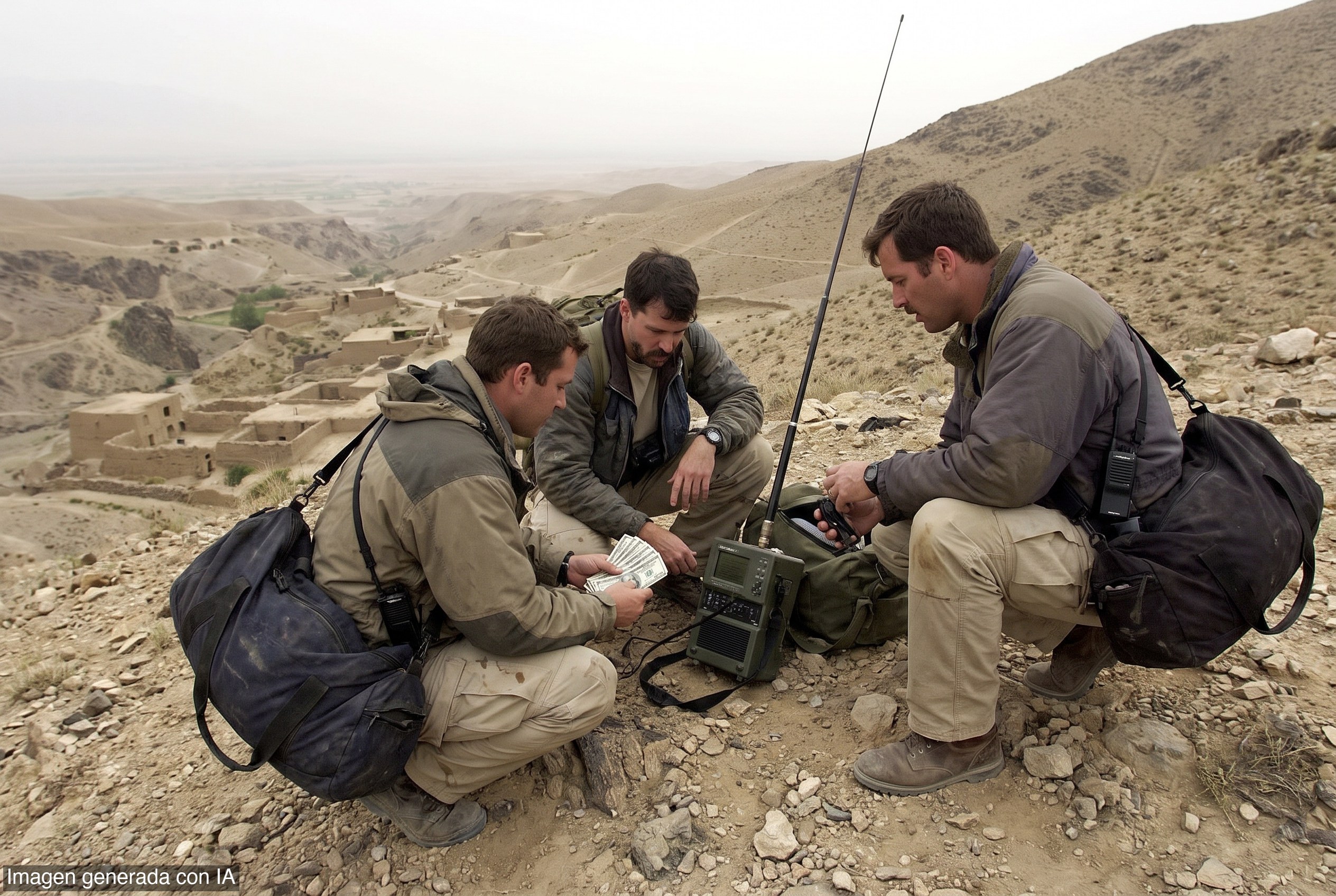
On Sept. 26, 2001, an eight-man CIA team known as Operation Jawbreaker landed in Afghanistan's Panjshir Valley carrying satellite radios and $3 million in nonsequential $100 bills.
Ten days later, Operation Enduring Freedom began with U.S. airstrikes to topple the Taliban regime and eliminate al-Qaeda's sanctuary in Afghanistan. Twelve days after that, Special Forces Operational Detachments Alpha 595 and 555 inserted to rally the Northern Alliance and push toward Mazar-i-Sharif.
The mission quickly turned into a battle fought across centuries. The men of ODA 595 rode horses through the Dari-a-Souf Valley with local allies, using GPS receivers and laser designators to guide strikes on Taliban positions. In one declassified account, the team leader said he was 'advising a man on how best to employ light infantry and horse cavalry in the attack against Taliban T-55s.'
At Bai Beche on Nov. 5, 250 horsemen charged ahead while bombs were still falling. After laser-guided bombs hit the Taliban positions, the riders swept through the trenches and overran the defenders.
The first American killed in the conflict, Mike Spann, died on Nov. 25, 2001. He had told his parents: 'What everyone needs to understand is that these people hate you. They hate you because you are an American.'
The big picture: the U.S. response was fast, unconventional and heavily reliant on special operators, airpower and allied fighters. On the 25th anniversary of Sept. 11, the heroism is in the speed and scale of that first counterattack.